Safeguarding at Bishop Tufnell
Bishop Tufnell CE Primary School fully recognises our moral and statutory responsibility to safeguard and promote the welfare of all children. Our Safeguarding and Child Protection Policy sets out the safeguarding responsibilities of the school.
All Governors, staff and volunteers at school have undertaken an enhanced Disclosure and Barring Scheme check (DBS) and receive regular updated training on how to best protect our children from harm.
If you would like to understand more about this or ask us a question, please email the school office 'for the attention of the safeguarding leader'.
Please see the details below regarding many key aspects of safeguarding.
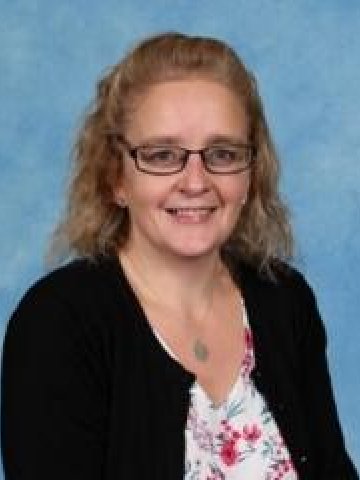
Miss Type
Designated Safeguarding Lead
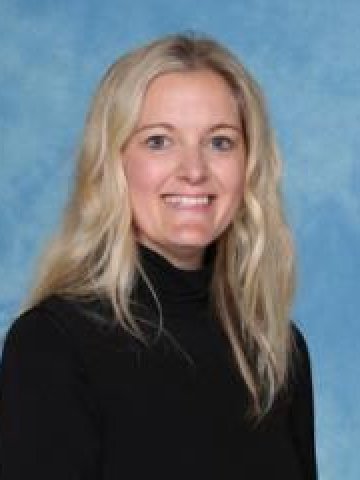
Mrs Hepworth
Deputy Designated Safeguarding Lead

Mr Chamberlin
Deputy Designated Safeguarding Lead
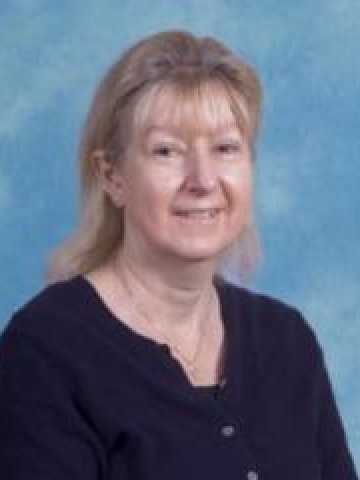
Mrs Carey
Designated Safeguarding Governor
Our approach to ensuring every child is safe and happy is detailed in our latest Safeguarding Policy which is updated at least annually and can be found on our Policies page.
The NSPCC have a helpful guide to support you in deciding what level of independence your child is ready for. If you would like support in thinking through this, you can download their guide below:
Online Safety is an integral part of the school curriculum in all schools. From Reception to Year 6, this is vital to help children enjoy the wonderful opportunities that our increasingly technological world can offer. Through our curriculum and other aspects of school life, we encourage children to celebrate what technology can offer us in a safe and responsible manner. In addition to the curriculum (lessons), we take the opportunity to raise awareness of Online Safety through assemblies and it is high profile during National awareness events such as Anti-Bullying Week and Safer Internet Day. We also intervene quickly if we are made aware of any on-line safety issues within our school community.
However, this is not a task we can manage alone! Our curriculum lessons are planned with the support of the Local Authority and incorporate resources from a range of key providers. We aim to work in partnership with parents to provide a support network for children as they explore, communicate, play and learn on-line. We endeavour to provide as much information as possible for parents, through newsletters and our school website.
It is important to keep reviewing practice, as a school, as a family and as a pupil – in response to the way technology changes – almost daily. We regularly seek advice from the Local Authority support team and use some key websites to keep us updated. We also listen carefully to what the children have to say. The staff talk to children, giving regular reminders and about basic on-line safety and of course listen to any concerns the children may have.
If you have any worries or concerns then please contact a member of our Safeguarding Team.
Useful Websites
Have a look at some of the advice provided on these key websites to ensure your child is safe online.
- Internet Matters - Interactive guide.
- Parent Zone - Digital family life support.
- NSPCC - Online safety advice.
- BBC Newsround - Internet safety guide.
- UK Safer Internet Centre
- UK Safer Internet Centre - YouTube safety controls.
- CEOP Safety Centre - Report online abuse.
YouTube Risks – Uploading Video
Many children spend a lot of time watching YouTube and children often wish to create their own YouTube films. In doing so, without careful thought, they can leave themselves open to bullying or online grooming by revealing personal details and making videos and comments available to anyone.
This is not illegal but the minimum age to create a YouTube account is 13. Having an account for a younger child breaks the terms and conditions of the site. It is not possible to upload videos without creating an account.
The following links provide additional information for parents and teachers:
- YouTube Parent Support - Teen online safety guide.
- UK Safer Internet Centre - YouTube safety controls.
Social Networking advice for Parents/Carers
Bishop Tufnell CE Primary School is committed to promoting the safe and responsible use of the Internet and as such we feel it is our responsibility to raise this particular issue as a concern. Websites such as Facebook offer amazing communication and social connections, however they are created with their audience in mind and it is not possible to control or verify the content.
Facebook’s terms and conditions state that all users must be 13 years or older and as such we strongly recommend that parents do not allow their children to have their own personal profiles online.
Possible risks for children under 13 using Facebook may include:
- Facebook use “age targeted” advertising and your child could be exposed to adverts of a sexual or other inappropriate nature.
- Children may accept friend requests from people they don’t know in real life which could increase the risk of inappropriate contact or behaviour.
- Language, games, applications, groups and content posted or shared on Facebook is not moderated, and therefore can be offensive, illegal or unsuitable for children.
- Photographs shared by users are not moderated and therefore children could be exposed to inappropriate images or even post their own.
- Underage users might be less likely to keep their identities private and lying about their age can expose them to further risks regarding privacy settings and inappropriate behaviour.
- Facebook cannot and does not verify its members therefore it is important to remember that if your child can lie about who they are online, so can anyone else!
We feel it important to point out to parents the risks of underage use of such sites, so you can make an informed decision as to whether to allow your child to have a profile or not. These profiles will have been created away from school and sometimes by a child, their friends, siblings or even parents. We will take action (such as reporting under aged profiles) if a problem comes to our attention that involves the safety or wellbeing of any of our children. We are however aware that many children do use such sites and it is possible that by banning access and removing children’s technology may mean that children do not feel able to raise any concerns or problems encountered with parents/carers or adults in school. It is also important that parents/carers are aware that whilst filtering tools or parental controls are very useful in keeping children safe online, they are not always effective and children may still access unsuitable content.
However, if you should decide to allow your child to have a Facebook profile we strongly advise you to be aware of the potential risks posed to your child. You may want to consider the following points.
- Check their profile is set to private and that only approved friends can see information that is posted.
- Closely monitor your child’s use and talk to them about safe and appropriate online behaviour such as not sharing personal information, clicking on unknown links, installing applications and not posting offensive messages or photos.
- Ask them to install the CEOP (Child Exploitation and Online Protection Centre) application on www.facebook.com/clickceop on their profile.
- Set up your own profile so you understand how the site works and ask them to have you as a friend on their profile so you know what they are posting online.
Make sure your child understands the following rules:
- Always keep your profile private and never accept friends you don’t know in real life.
- Never post anything online which could reveal your identity or anything you wouldn’t want your parents to see.
- Only click on links that you trust and always ask an adult if first if you are not sure.
- Never agree to meet somebody you only know online without telling a trusted adult.
- Always tell an adult you trust if you feel threatened, see something that makes you feel worried or someone upsets you online.
We recommend that all parents visit CEOPs Think U Know website for more information on keeping your child safe online CEOP Education. Our Online Safety policy and Acceptable Use policies are available to read under the policies tab.

One part of our wider safeguarding responsibilities is to ensure appropriate use of photography at school. Details of how we do this are within our safeguarding policy (linked above) and are summarised below.
The vast majority of people who take or view photographs or videos of children do so for entirely innocent, understandable and acceptable reasons. Sadly, some people abuse children through taking or using images, so we must ensure that we have some safeguards in place.
To protect pupils we will:
- Seek their consent and parental consent for photographs to be taken or published (for example, on our website or in newspapers or publications).
- Use only the pupil’s first name with an image.
- Ensure that pupils are appropriately dressed.
- Encourage pupils to tell us if they are worried about any photographs that are taken of them.
- Ensure that pupils do not take photographs or video images of other students without their express permission and the permission of a member of staff.
Parents are permitted to take photos or videos of their children during school performances such as class assemblies or music productions. It is reiterated at all such events that these images are not to be shared on social media including messaging apps such as Whatsapp.
Why such an approach to photography at school events?
We understand the joy that reliving memories of our children taking part in sports day or a school performance can bring. However, the school has a policy in place with regards to the taking and use of images that families must follow.
Images including other people (children or adults) must not be distributed or put anywhere online unless consent has been sought in advance. This includes social media platforms such as WhatsApp. The sharing of photographs and videos on social media is now commonplace but we must ensure we protect and safeguard all children and staff, including those who do not want to have their images stored online.
Parents should be mindful that:
- Once posted and shared online any image or video can be copied and will stay online forever.
- Some children are at risk and MUST NOT have their image put online. Not all members of the community will know who these children are.
- Some people do not want their images online for personal or religious reasons.
- Some children and staff may have a complex family background which means that sharing their image online can have unforeseen consequences.
- Therefore in order to keep all members of the community safe, we do not post images of school events online unless express permission has been sought.
We thank you for working in collaboration with us to keep our community safe.
What is bullying?
Learning to understand and manage conflict is an important part of growing up. Bullying is not simply a 'falling out'. Research shows that experiencing bullying can have a significant impact on a child's life well into adulthood. To ensure we are able to prevent bullying, act quickly when it takes place and avoid misidentifying bullying, it is vital that schools have a shared definition of bullying.
We define bullying as: The repetitive, intentional hurting of a person/group by another person/group, where the relationship involves an imbalance of power. It can occur face to face or online.
We use the acronym S T O P (Several Times On Purpose)
Our approach to promoting excellent behaviour and managing incidents of bullying can be found on our policies page.
Anti-Bullying Alliance is a partnership body. Together with the National Children’s Bureau we are united for a better childhood.

Promoting British Values at Bishop Tufnell Primary School
British values are an important part of our curriculum. Our teaching programme promotes the following key principles:
- An understanding of how citizens can influence decision-making through the democratic process.
- An understanding that participation in elections by those opposed to democracy should be allowed by law, but the success of such candidates is undesirable for the well-being of society if it would lead to the end of democracy.
- An understanding that bodies such as the police and the army can be held to account by the people, through the democratic organs of government.
- An understanding that the freedom to hold other faiths and beliefs is protected in law and an acceptance that other people having different faiths or beliefs to oneself (or having none) should not be the cause of prejudicial or discriminatory behaviour.
We promote these principles by:
- Including within the curriculum age-appropriate examples of the advantages and disadvantages of democracy and law in Britain, compared to other forms of government in other countries.
- Ensuring that all pupils have a voice that is listened to through democratic processes such as the School Council.
- Using opportunities such as local and national elections to hold mock elections to promote British values and to provide learners with opportunities to argue and defend different points of view.
- Considering the role of extra-curricular activities and off-site visits in promoting fundamental British values.
As part of promoting British values, we encourage children to explore what is "Britishness" and acknowledge four key areas of learning:
Democracy
Democracy is part of our working practice at the school. Pupils are always listened to by adults and are taught to listen carefully and with concern for each other. We respect the right of every individual to have their opinions and voices heard. Pupils have their own voice and are able to air their opinions and ideas though our School Council and through representation on cross-school groups such as the Eco-Warriors and the Sports Ambassadors. The election of the School Council members is based on pupil votes, demonstrating democracy in action.
The Rule of Law
The importance of laws, whether they are those that govern the class, the school or the country, are consistently reinforced. Our core values are reflected in children's routines every day. Each class follows a school code of conduct which is based on strong core values within an optimistic growth culture. We believe that all learners can succeed and meet high expectations. Our behaviour policy, as well as promoting good behaviour and effort, also makes it clear that if rules are broken then there are consequences. Children take part in reflecting and identifying how to make amends. Our children are also taught that there are laws to protect us and that when these laws are broken we are potentially putting ourselves in danger and could find ourselves in trouble, e.g. for inappropriate use of social media.
Individual Liberty
Within school, pupils are actively encouraged to make choices, knowing that they are in a safe and supportive environment. As a school we educate and provide boundaries for our pupils to make choices safely, through the provision of a safe environment and an empowering education. Our pupils are encouraged to know, understand and exercise their rights and personal freedoms and are advised how to exercise these safely; examples of this can be clearly seen in Collective Worship and PSHE. Whether it is through choice of challenge in maths, of how they work in groups and record their work or their choice to participate in one or more of our numerous extra-curricular activities, our pupils are given the freedom to make choices and to reflect on the impact of the choices they make.
Mutual Respect of Those with Different Faiths and Beliefs
Respect is one of the values that drive our ethos. Through our use of working with others and use of talk partners, the children are taught to work in harmony with others regardless of differences in attainment or gender. We emphasise the right and responsibility of every child to learn. We ensure that children understand that they need to consider their actions carefully so that they do not detract from learning and therefore affect the right of others to learn.
Bishop Tufnell CE Primary School enhances pupils' understanding of different faiths and beliefs through Religious Education Collective Worship and other areas of the curriculum such as the cross-curricular Learning Journeys. This is further enhanced through carefully planned educational visits and by welcoming parents and visitors from outside the school. Through this our pupils gain an enhanced understanding of their place in a culturally diverse society and nation. Due to the relative lack of cultural diversity in this locality, we make every effort to highlight important global events such as Chinese New Year. As a church aided school, the Spiritual, Moral, Social and Cultural development of learners is very important and is regularly reviewed and enhanced.
Prevention of Radicalisation
All members of the school community are aware of the danger of radicalisation, particularly through the internet, and all staff have received training in how to deal with this danger. Prevention of radicalisation forms part of all of our safeguarding policies. The DSL is the point of contact if liaison is required with other agencies through the local "Channel" procedures.
What is the PREVENT duty?
‘Prevent’ relates to the Counter Terrorism and Security Act 2015 which came into force on 1 July 2015. Since July 1 2015 there has been a duty on schools to have ‘due regard to the need to prevent people from being drawn into terrorism’. This is called the Prevent duty.
Schools are expected to encourage pupils to respect other people with particular regard to the protected characteristics set out in the Equality Act 2010 (age, disability, gender reassignment, marriage and civil partnership, pregnancy and maternity, race, religion and belief, sex and sexual orientation).
Schools can build pupils’ resilience to radicalisation by promoting fundamental British values and enabling them to challenge extremist views. As with all forms of safeguarding, adults should use their professional judgement in identifying an individual who may be at risk of radicalisation.
What is Radicalisation?
“Radicalisation” refers to the process by which a person comes to support terrorism and forms of extremism leading to terrorism. During that process it is possible to intervene to prevent vulnerable people being drawn into terrorist-related activity.
What is Extremism?
‘Vocal or active opposition to fundamental British values, including democracy, the rule of law, individual liberty and mutual respect and tolerance of different faiths and beliefs’. Being drawn into terrorism includes not only violent extremism but also non-violent extremism.
What are our procedures?
The School has clear procedures in place to safeguard children which includes protecting children at risk of radicalisation. These procedures are set out in our safeguarding policy. All staff are aware of the School’s policies and procedures and follow these for any aspect of safeguarding, including extremist views/extremism.
As with any form of safeguarding if a member of staff, parent or community member has any concerns about a child in the first instance they should inform the Designated Safeguarding Lead at School in order that any individuals who are at risk receive support for any personal vulnerabilities.
Are you worried about the welfare of a child?
If you or a child is in immediate danger, call the police on 999.
If you are concerned about the welfare of a child who lives in West Sussex or you need support, you can contact the Integrated Front Door:
-
From 9am to 5pm, Monday to Friday call 01403 229900.
-
Out of hours, phone 033 022 26664.
Or, by following this link: Request support or raise a concern about a child - West Sussex County Council.